Blog
Schluter vs. Traditional Shower Pan Systems: Which Is Better for Your Custom Home?
Published
Category
Construction Guides
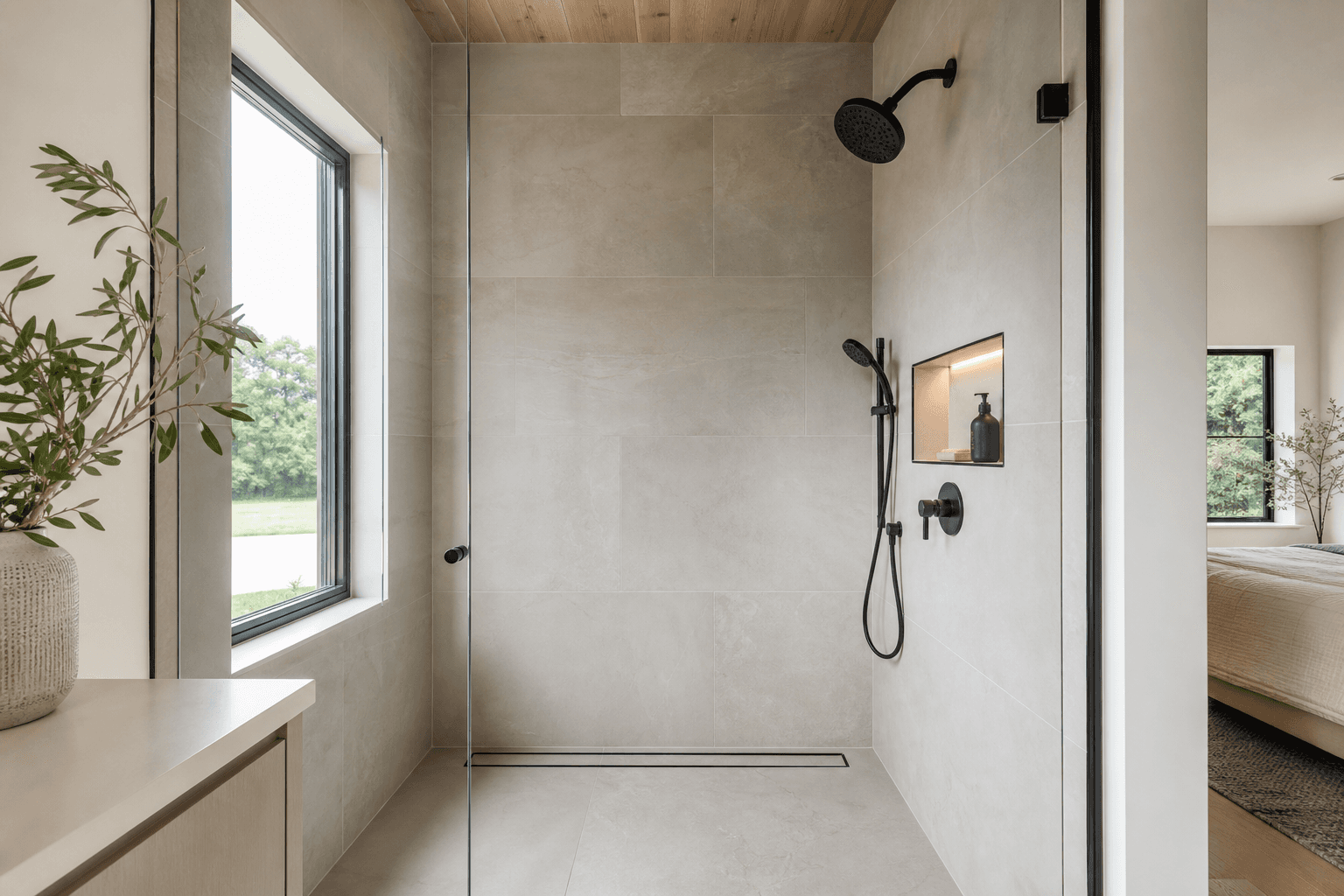
The shower pan decision seems like a small detail — but get it wrong and you're looking at a major leak and mold remediation down the road. Here's what we use and why.
When building a custom home, the shower pan isn't a detail most homeowners spend much time thinking about. It's hidden behind tile, invisible once the bathroom is finished. But it's one of the most consequential decisions in your entire build — because a failed shower pan doesn't just mean a wet floor. It means water infiltrating your subfloor, your joists, and potentially the floor below, creating mold, structural damage, and a remediation project that can cost far more than the shower itself.
At South Eastern General Contractors, we've made the deliberate switch to the Schluter system on our custom home builds. Here's why — and what you should know about both approaches before making this decision on your home.
The Traditional Mud Bed Shower Pan
For decades, the standard approach to custom tile showers was a mud bed (also called a mortar bed) system. Here's how it works:
A liner — typically a sheet of PVC or CPE — is installed in the shower floor area
A mortar bed is floated over and around the liner, sloped toward the drain
Tile is set on top of the cured mortar
This method has worked reliably for generations of tile setters when done correctly. The key phrase is "when done correctly." Mud bed systems are highly dependent on skilled craftsmanship — the liner must be folded and set without punctures, the slope must be precise (1/4" per foot toward the drain), and the mortar consistency and cure time must be right.
Vulnerabilities of Traditional Mud Bed Systems
Liner punctures — fasteners, sharp tools, or improper handling can create small holes that aren't visible until water finds them
Grout joint permeability — standard grout absorbs water over time; even with a functioning liner, the mortar bed can become saturated
Weep holes — the drain assembly has weep holes to release water from the saturated mortar bed; if these get blocked by debris or grout, moisture has nowhere to go
Long-term performance — a saturated mud bed that never fully dries becomes a potential mold environment
The Schluter System
Schluter Systems (specifically the Schluter-KERDI and Schluter-DITRA product family) takes a fundamentally different approach. Instead of relying on a plastic liner buried under mortar, Schluter uses a continuous membrane system that bonds directly to the substrate and under the tile.
How It Works
The shower floor uses a Schluter-KERDI-SHOWER tray — a foam-core shower tray with a pre-sloped surface and integrated waterproof barrier
Walls use KERDI membrane — a bonded, thin waterproofing layer applied over cement board or directly to properly prepared drywall
The entire assembly — floor to walls — creates a continuous, bonded waterproof system
Tile is set directly onto the Schluter surfaces with unmodified thinset
Advantages of the Schluter System
Bonded waterproofing — water never penetrates to the substrate because the membrane is continuous and bonded
Significantly faster installation — no waiting for mortar bed cure time; the pre-sloped tray eliminates the need to float a mud bed
Consistent performance — less dependent on individual craftsman skill for the waterproofing function itself
Lightweight — pre-formed foam trays are significantly lighter than a mortar bed, which matters in multi-story construction
Warranty — Schluter offers a system warranty when installed per their specifications
Things to Know About Schluter
Requires unmodified thinset throughout — modified thinset (which most tile setters default to) can compromise the membrane bond
Tile setters must be familiar with the system; it's installed differently than a mud bed and proper training makes a difference
Higher material cost than a basic liner-and-mud system — but this is offset by faster labor and the long-term value of superior waterproofing
Which One Does SEGC Use?
We've moved to Schluter as our standard system for custom shower pans on SEGC builds. The combination of bonded waterproofing, consistent performance, and system warranty aligns with our commitment to building homes that perform at the highest level for decades — not just until the warranty runs out.
When a client is building a custom shower, they're typically investing in high-end tile, custom fixtures, and linear drains. It makes no sense to protect that investment with a decades-old liner system when a superior bonded alternative exists.
What to Ask Your Builder About Waterproofing
If you're building a custom home and it includes a tile shower, ask your builder which waterproofing system they use and why. It's a question that separates builders who are thinking about long-term performance from those who are thinking about this week's schedule.
Questions about our bathroom construction standards? Reach out to the SEGC team at or visit southeasterngc.com.

South Eastern General Contractors
South Eastern General Contractors is a Native American-owned, 8(a) and HUBZone certified construction firm with over 21 years of proven results across Fayetteville, Lumberton, and the surrounding North Carolina communities. We build legacies, not just structures.
Ready to Build With Clarity and Confidence?
Your project deserves more than a contractor who just shows up and starts building. We guide you through a professional design-build process built around clear plans, detailed selections, documented scopes, and construction checklists that help eliminate confusion, mistakes, and missed expectations.
Other Blogs