Blog
How NC Electrical Rough-In Inspections Work (And What Fails)
Published
Category
Construction Guides
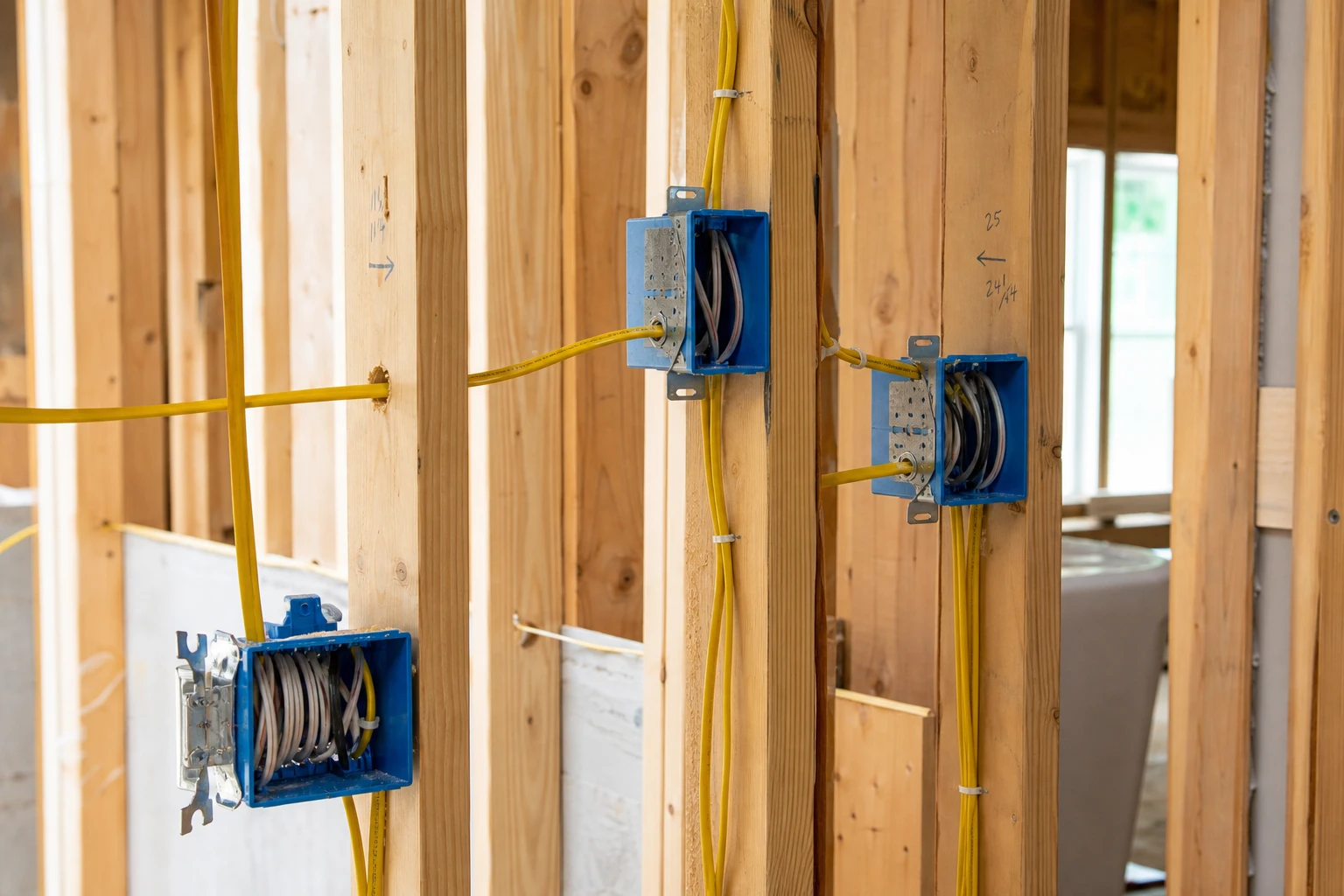
Your electrical rough-in inspection is one of the most critical milestones in new construction. Here's what the inspector looks for, what causes common failures, and how SEGC preps for a clean pass.
The Electrical Rough-In: One of the Most Important Inspections in Your Build
In new home construction in North Carolina, the electrical rough-in inspection is one of the "Big Four" inspections that happen before drywall goes up — along with framing, plumbing rough-in, and HVAC rough-in. Pass all four, and you can hang drywall. Fail one, and everything stops until the corrections are made and the inspector comes back.
The electrical rough-in inspection is arguably the most detail-intensive of the four. There are hundreds of individual wire runs, connections, boxes, and protection devices in a typical custom home, and the inspector needs to verify that every single one meets the current National Electrical Code (NEC) as adopted by North Carolina. At South Eastern General Contractors, we've managed this inspection on hundreds of homes across Fayetteville and the Fort Bragg area. Here's what homeowners should know about what happens, what fails, and how a quality builder prepares.
What the Inspector Is Looking For
The NC electrical rough-in inspection covers everything from the service entrance (where power enters the building) to the last outlet box in the farthest bedroom. The inspector is checking compliance with the NEC 2020 edition (as adopted in NC with amendments). Here are the major areas they examine:
Wire Sizing and Protection
Every circuit in your home uses a specific wire gauge matched to a specific breaker size. The most common:
14 AWG wire on 15-amp breakers — general lighting circuits
12 AWG wire on 20-amp breakers — kitchen, bathroom, garage, and outdoor receptacles
10 AWG wire on 30-amp breakers — dryers, water heaters
8 or 6 AWG wire on 40-50 amp breakers — ranges, ovens, HVAC equipment
The inspector verifies that wire gauge matches breaker amperage throughout the house. Using 14 AWG wire on a 20-amp breaker is a code violation and a fire hazard — the wire can overheat before the breaker trips. This sounds basic, but it's one of the most common failures, especially when electricians substitute wire due to material shortages.
Box Fill Calculations
Every electrical box (outlet, switch, junction) has a maximum number of wires it can contain, based on the box's cubic inch volume and the gauge of wire entering it. A standard single-gang 18 cubic inch box can hold a specific number of conductors, clamps, devices, and grounds — and exceeding that limit is a code violation.
This fails inspection more often than you'd expect, particularly in kitchen areas where multiple circuits converge, and at switch locations that control multiple fixtures. The fix is straightforward — replace the box with a larger one or redistribute wires — but it requires pulling the box and refastening, which is time and labor after the fact.
GFCI and AFCI Protection
Ground Fault Circuit Interrupters (GFCI) and Arc Fault Circuit Interrupters (AFCI) are two of the most important safety devices in modern residential electrical systems. NC code, following NEC 2020, requires:
GFCI protection — all bathroom receptacles, kitchen countertop receptacles, garage receptacles, outdoor receptacles, basement/crawl space receptacles, laundry receptacles, and any receptacle within 6 feet of a sink
AFCI protection — all 15 and 20-amp branch circuits serving bedrooms, living rooms, dining rooms, family rooms, hallways, closets, and similar habitable spaces
Missing GFCI or AFCI protection is a common inspection failure. The NEC has expanded AFCI requirements significantly over the past three code cycles, and some electricians (particularly those who learned on older code editions) occasionally miss newly required locations.
Proper Stapling and Support
Romex cable (NM-B) must be stapled within 12" of every box and every 4.5 feet along its run. Cables running through drilled holes in studs don't need stapling at each stud, but they do need to be stapled within 12" of the box on each end. Cables running along the face of framing (rather than through drilled holes) need staples at every framing member.
Loose, unsupported cable runs are a common fail. The fix is simple — more staples — but the inspector will flag every instance.
Nail Plates
When a wire passes through a drilled hole in a stud or joist that is less than 1.25" from the face of the framing member, a steel nail plate must be installed to protect the wire from drywall screws and finish nails. This is a safety requirement — a screw driven through Romex cable creates a direct fire and shock hazard.
Missing nail plates are one of the top three electrical rough-in failures in our experience. It's also one of the easiest to prevent — the electrician should be installing nail plates as they wire, not going back afterward.
Receptacle and Switch Placement
The NEC has specific requirements for receptacle placement that the inspector will verify:
No point along any wall can be more than 6 feet from a receptacle — this means receptacles every 12 feet maximum along walls, and on any wall section wider than 24 inches
Kitchen countertop receptacles every 4 feet — and every island or peninsula longer than 24" needs at least one
Bathroom receptacle within 36" of each sink
Outdoor receptacles at front and back of dwelling
Garage: at least one receptacle, GFCI protected
Hallway receptacles — required if the hallway is 10 feet or longer
The Most Common Fail Reasons in Our Area
Based on our experience with hundreds of electrical inspections in Cumberland County and the surrounding jurisdictions (Hoke, Robeson, Harnett), here are the issues that cause the most failures:
Missing nail plates — probably the #1 fail. Easy to miss, easy to fix, but it stops the inspection.
AFCI protection gaps — a bedroom or living area circuit on a standard breaker instead of an AFCI breaker.
Box fill violations — too many wires in a box, especially at 3-way and 4-way switch locations.
Improper bonding — water heater, gas piping, and CSST (corrugated stainless steel tubing for gas) must be properly bonded. CSST bonding in particular has specific requirements (direct bonding to the gas piping system at its entry point) that are sometimes missed.
Missing receptacles — a wall section that should have a receptacle based on the 6-foot rule.
Smoke/CO detector wiring — interconnected, hardwired smoke detectors in every bedroom, outside each sleeping area, and on every level. Carbon monoxide detectors required on every level with a fuel-burning appliance or attached garage. Missing or non-interconnected detectors fail.
How SEGC Prepares for a Clean Pass
A failed inspection costs time and money — the inspection fee for a re-inspection, the electrician's time to make corrections, and the schedule delay while waiting for the inspector to return (which can be 2-5 business days in busy periods). That's why we front-load the quality control.
Before we call for the electrical rough-in inspection, our project superintendent does a complete walkthrough using a checklist that mirrors what the inspector will check. We verify box fill at complex locations, check for nail plates at every penetration within 1.25" of the face, confirm GFCI and AFCI coverage on the panel schedule, and visually trace every cable run for proper support.
This pre-inspection walkthrough catches 90% of issues before the inspector ever arrives. It adds 2-3 hours to our superintendent's schedule, but it virtually eliminates failed inspections and the schedule disruption that comes with them.
What Homeowners Should Know
As the homeowner, you probably won't be present for the electrical rough-in inspection — and you don't need to be. But here are a few things worth understanding:
A passed inspection means the wiring meets code — not that every outlet is where you want it. If you want changes to receptacle locations, switch heights, or fixture placements, those conversations need to happen before rough-in, not after.
The inspector checks code compliance, not design quality. A house can pass inspection with the minimum required number of outlets and still not have enough for your needs. Work with your builder to add convenience outlets, USB-equipped receptacles, and dedicated circuits for home office equipment, EV chargers, and workshop tools during the design phase.
Smart home pre-wire happens at rough-in. If you want structured wiring for whole-home audio, security cameras, networking, or home automation, those low-voltage cables need to be run during the rough-in phase, before drywall. They aren't inspected by the electrical inspector, but they can't be installed easily after the walls are closed.
Build with a Team That Gets It Right
At South Eastern General Contractors, our attention to inspection readiness is one of the reasons we've maintained a track record of clean passes across 21+ years of custom home construction in the Fayetteville and Fort Bragg area. We're a Native American-owned, 8(a) and HUBZone certified firm, and we bring the same accountability to every electrical panel that we bring to every contract.
Planning a custom home? Contact SEGC at (910) 565-4719 or visit southeasterngc.com to learn about our process.

South Eastern General Contractors
South Eastern General Contractors is a Native American-owned, 8(a) and HUBZone certified construction firm with over 21 years of proven results across Fayetteville, Lumberton, and the surrounding North Carolina communities. We build legacies, not just structures.
Ready to Build With Clarity and Confidence?
Your project deserves more than a contractor who just shows up and starts building. We guide you through a professional design-build process built around clear plans, detailed selections, documented scopes, and construction checklists that help eliminate confusion, mistakes, and missed expectations.
Other Blogs