Blog
What Is a Level 5 Drywall Finish? The Custom Home Standard You Need to Know
Published
Category
Construction Guides
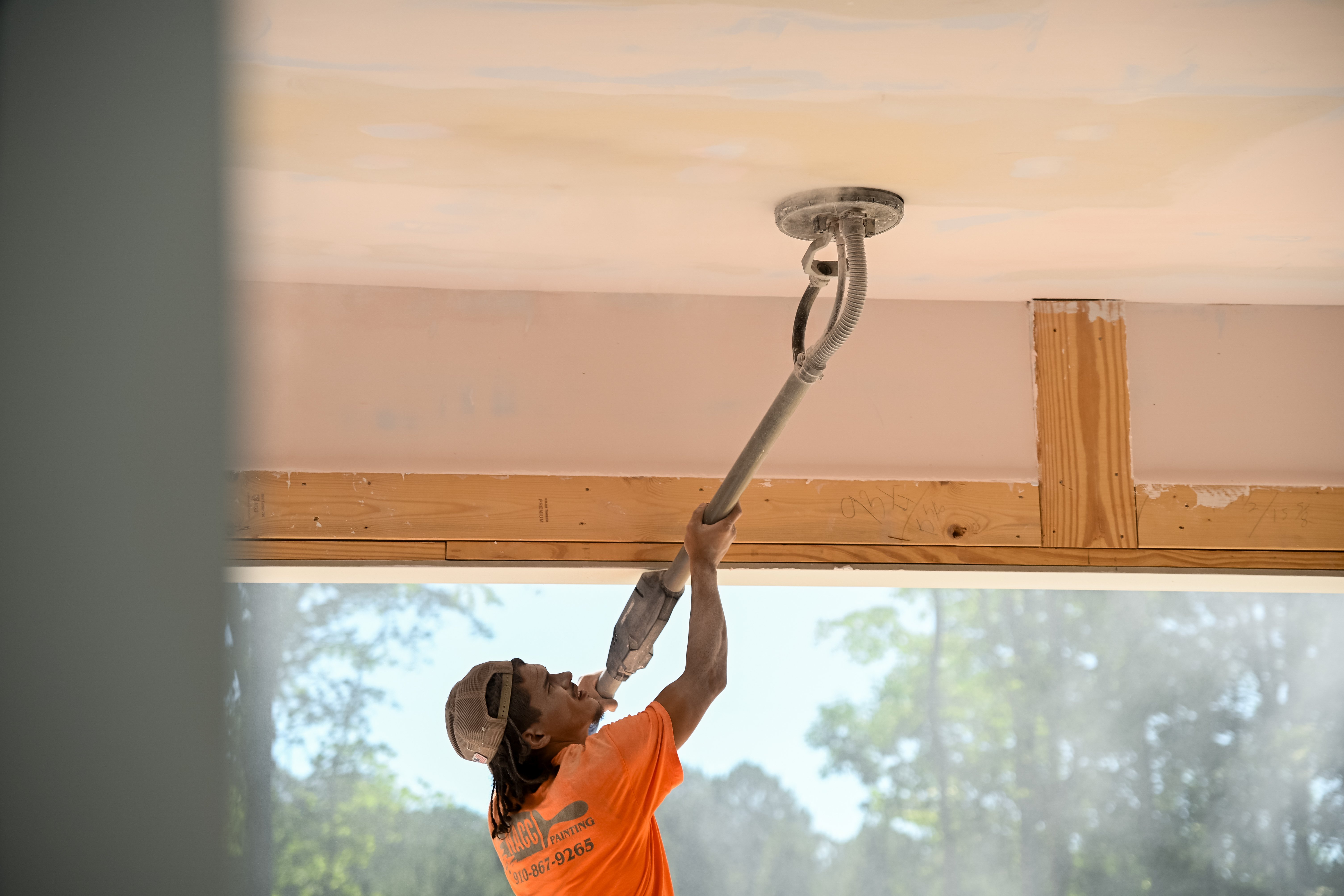
If you're building a custom home in North Carolina, a Level 5 drywall finish is the gold standard for paint-ready walls. Here's exactly what it means and why it matters.
If you've ever walked into a freshly painted room and noticed every imperfection in the walls — every ridge, screw dimple, and joint seam glowing under raking light — you've experienced what happens when drywall finishing is done to a lower standard. Building a custom home deserves better. At South Eastern General Contractors, we hold our drywall to a Level 5 finish, and we want you to understand exactly what that means.
The Drywall Finish Level Scale: 0 to 5
The drywall industry uses a finish level system from Level 0 (no finishing at all — bare board) through Level 5 (the highest quality, fully skim-coated surface). Each level builds on the previous:
Level 0: No taping or finishing. Temporary installations only.
Level 1: Tape embedded in joint compound. Used in attics or plenum spaces.
Level 2: Tape plus one coat of compound. For tile or textured surfaces only.
Level 3: Two coats of compound on seams, with a finished flat surface. Adequate for heavy texture applications.
Level 4: Three coats of compound, fully feathered and smooth. Acceptable for flat sheens in standard residential construction.
Level 5: All Level 4 work plus a full skim coat of compound applied to the entire surface of every wall and ceiling. The only appropriate finish for semi-gloss, gloss, or any critical lighting environment.
Why Level 5 Matters in Custom Homes
In production builder homes — the kind built by the dozens in a subdivision — Level 3 or 4 is the norm. Walls get a heavy texture sprayed over them, which hides surface imperfections. The problem? You're permanently locked into that texture. You can't repaint with a smooth finish later without a full skim coat overhaul.
Custom homeowners want smooth, flat walls. They want the option to choose any sheen from eggshell to high-gloss. They want walls that hold up under architectural lighting — pendants, sconces, directional cans — without showing seams. That's only possible with Level 5.
In North Carolina's climate, temperature and humidity swings can cause drywall boards to flex slightly over time. A Level 5 finish, applied as a continuous monolithic surface, is more resistant to visible cracking at joints under these conditions than a Level 3 or 4 finish.
The Level 5 Process Step by Step
A true Level 5 finish is a multi-day, multi-step process. Here's how we execute it on our custom home projects:
Step 1: Level 4 Prep — Three Coats of Mud
Before a skim coat can go on, the underlying Level 4 work must be perfect. This means three full coats of joint compound over all seams, corners, and fastener heads — each coat allowed to fully dry and sanded between applications. Feathering at the edges is critical: if you can feel a ridge where the compound ends, it will telegraph through the skim coat.
Step 2: Sand and Dust — Completely
Every wall and ceiling surface is sanded after the final Level 4 coat. Then — and this step gets skipped by less disciplined crews — every surface is dusted completely clean. Drywall dust left on the wall will contaminate the skim coat adhesion. We inspect with bright lights before moving on.
Step 3: Spotlight Inspection
This is the step that separates quality builders from the rest. We conduct a room-by-room spotlight inspection using powerful directional lights held at a raking angle to the wall surface. This technique reveals every remaining imperfection invisible under normal lighting — low spots, high spots, ridges, divots, flashed joints. Anything found gets "pointed up" with a fast-setting tinted compound (the different color lets us track exactly what was addressed). We inspect every wall and ceiling surface, both flat and at the inside and outside corners.
Step 4: Point Up and Re-sand
Pointed-up areas are re-sanded once dry, being careful not to over-sand and create a new depression. Then the entire surface is dusted again. Only after this quality gate do we proceed to the skim coat — and only after the foreman confirms every room passes the spotlight test.
Step 5: Full Skim Coat
A thin, even layer of finishing compound is applied across the entire surface of every wall and ceiling — not just over the seams. This is the skim coat, and it creates the monolithic smooth surface that makes Level 5 what it is. Our crews apply it fresh and pull it tight, ensuring no thick spots that could crack and no thin spots that leave texture from the drywall face paper visible.
Step 6: Final Sand and Prime
After the skim coat dries, final sanding brings the entire surface to a flat, consistent finish. The wall is then primed with a high-quality drywall primer before paint is ever applied. Skipping the primer after a skim coat is one of the most common mistakes in residential construction — paint applied directly over bare compound will flash unevenly (called "photographing"), showing joint locations right through the paint.
What Homeowners Should Watch For
When evaluating a custom home builder's quality, ask specifically about their drywall finish level and request to see it under directional lighting before paint is applied. A reputable builder won't hesitate to show you. Watch for:
Visible seams or ridges in raking light
Screw or nail dimples visible after prime coat
Texture differences between board field and seam areas
Corner bead telegraphing through the finished wall
Any of these in a custom home indicates the work was finished to Level 3 or 4 at best — acceptable for a production build, but not for a home you've invested in designing from the ground up.
Level 5 Finish and North Carolina's Climate
Fayetteville and surrounding areas see significant seasonal humidity swings. High-quality drywall finishing compounds are formulated to handle this, but they require proper application. Rushing any coat — applying the next layer before the previous one has fully cured — leads to shrinkage cracks. Our project management schedules proper dry time between every coat, which in North Carolina's summer humidity may mean an extra day of patience that lesser builders skip.
The Bottom Line
A Level 5 drywall finish isn't a luxury add-on for a custom home — it's the baseline standard for a home that will hold its value, look its best, and give you the flexibility to update your interior design over the years. At South Eastern General Contractors, it's how we build every custom home we take on.
Ready to start your project? Call South Eastern General Contractors at (910) 565-4719 or visit southeasterngc.com to schedule a consultation with our team.

South Eastern General Contractors
South Eastern General Contractors is a Native American-owned, 8(a) and HUBZone certified construction firm with over 21 years of proven results across Fayetteville, Lumberton, and the surrounding North Carolina communities. We build legacies, not just structures.
Ready to Build With Clarity and Confidence?
Your project deserves more than a contractor who just shows up and starts building. We guide you through a professional design-build process built around clear plans, detailed selections, documented scopes, and construction checklists that help eliminate confusion, mistakes, and missed expectations.
Other Blogs