Blog
What Is a Blower Door Test — and Why It Matters for Your New Home
Published
Category
Construction Guides
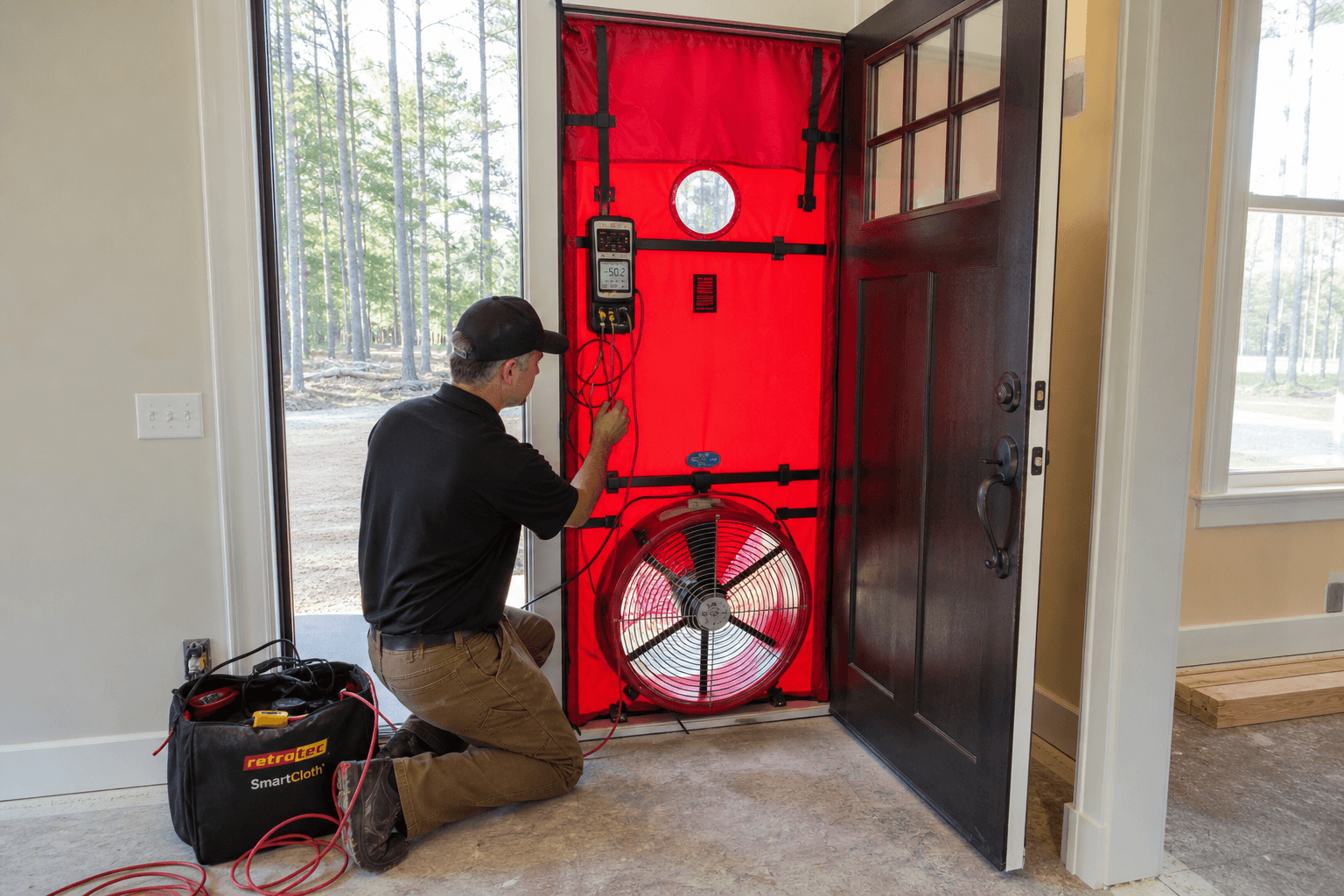
Most new homeowners have never heard of a blower door test. But this single inspection can tell you more about your home's energy efficiency and air quality than almost anything else.
If you're building a new home in North Carolina, at some point in the final stretch your builder will schedule something called a blower door test. Most homeowners have never heard of it, but understanding what it measures — and what the results mean — can tell you a lot about the quality of the home you're moving into.
What Is a Blower Door Test?
A blower door test is an energy efficiency diagnostic. A technician temporarily installs a large, calibrated fan in one of your home's exterior doorframes and pressurizes (or depressurizes) the building. By measuring how quickly air leaks in or out, they can calculate the home's air infiltration rate — how "tight" or "leaky" the building envelope is.
The result is reported in ACH50 — air changes per hour at 50 Pascals of pressure. Lower is better. A highly energy-efficient home might achieve 1.0 ACH50 or below. A code-minimum home in NC must achieve 3.0 ACH50 or less under the 2018 NC Residential Building Code.
Why Does It Matter?
Air leakage is one of the leading causes of energy inefficiency in homes. Even a well-insulated home with R-38 attic insulation and R-21 walls can be significantly undermined if there are gaps around electrical outlets, plumbing penetrations, window rough openings, top plates, and other common leak points.
Here's what uncontrolled air infiltration does to your home:
Drives up utility bills — conditioned air escapes and unconditioned outdoor air enters, forcing your HVAC to work harder and run longer
Creates comfort issues — drafts, uneven temperatures between rooms, cold floors in winter
Causes moisture problems — humid outdoor air infiltrating a cool interior can condense inside wall cavities, leading to mold and structural damage over time
Degrades indoor air quality — when air isn't entering through controlled ventilation pathways, it may bring dust, allergens, pollen, and crawl space air with it
When Is It Done?
The blower door test happens after the home is fully sealed — insulation installed, drywall up, all penetrations sealed — but typically before the certificate of occupancy is issued. In NC, it's a required component of the energy code compliance package that must be submitted with your final inspection documentation.
What Happens If a Home Fails?
If a home doesn't meet the ACH50 threshold, the builder must find and seal the leaks before the final inspection can be approved. A skilled inspector with a blower door can also use smoke pencils or thermal imaging to identify exactly where the leaks are — so remediation is targeted, not guesswork.
Common leak sources that get caught by blower door testing include:
Top plate penetrations between conditioned and unconditioned spaces
Band joist areas at the foundation
Electrical boxes on exterior walls
HVAC penetrations through the building envelope
Attic hatch and pull-down stair gaps
Recessed light fixtures with no airtight housing
What's a Good Score for NC?
Code minimum: 3.0 ACH50 (required)
Good: 1.5–2.5 ACH50
Very good: 1.0–1.5 ACH50
Excellent / near-Passive House: below 0.6 ACH50
At SEGC, we target results well below code minimum on every build. Combined with spray foam insulation and properly sealed HVAC penetrations, our homes consistently achieve efficient air sealing that translates directly to lower utility bills for the homeowner.
Ask Your Builder About Their Blower Door Results
Before you close on any new construction home, ask the builder for the blower door test report. It's a public document required for code compliance, and a builder who is proud of their work will share it without hesitation.
If they don't have one, or they can't tell you the ACH50 result — that's a flag worth paying attention to.
Questions about energy efficiency standards in our builds? Call South Eastern General Contractors at or visit southeasterngc.com.

South Eastern General Contractors
South Eastern General Contractors is a Native American-owned, 8(a) and HUBZone certified construction firm with over 21 years of proven results across Fayetteville, Lumberton, and the surrounding North Carolina communities. We build legacies, not just structures.
Ready to Build With Clarity and Confidence?
Your project deserves more than a contractor who just shows up and starts building. We guide you through a professional design-build process built around clear plans, detailed selections, documented scopes, and construction checklists that help eliminate confusion, mistakes, and missed expectations.
Other Blogs