Blog
Aging in Place Home Modifications: A Fayetteville Homeowner's Complete Guide
Published
Category
Home Improvement
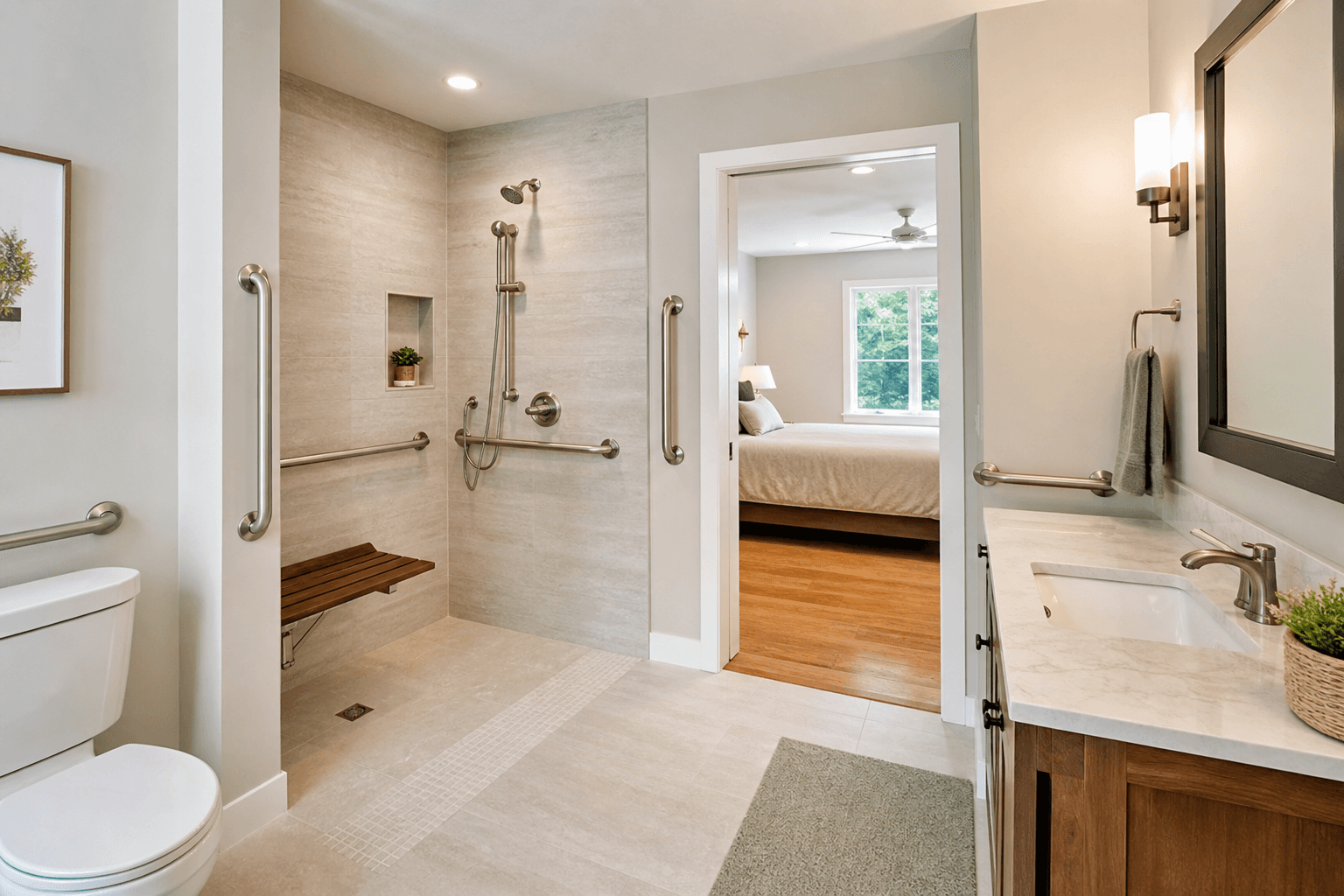
Planning to stay in your home as you age? Discover the essential home modifications that make aging in place safe and comfortable in Fayetteville, NC — from accessible bathrooms to zero-step entries.
More Americans than ever are choosing to age in place — staying in the comfort of their own home rather than transitioning to assisted living. In Fayetteville and the surrounding Cumberland County communities, this trend is accelerating. With a large military retiree population near Fort Bragg, growing retirement communities in the Sandhills region, and rising costs at senior care facilities, homeowners are investing in modifications that let them stay put safely for decades to come.
At South Eastern General Contractors, we have been building and renovating homes across Fayetteville and Lumberton for over 21 years. We have seen firsthand how a few strategic modifications can transform a standard home into one that supports independent living well into your 70s, 80s, and beyond. This guide covers every major modification category, what to prioritize first, and what to expect in terms of cost and timeline.
Why Aging in Place Makes Sense in 2026
The numbers tell a clear story. The average cost of assisted living in North Carolina runs between $4,000 and $6,000 per month — that is $48,000 to $72,000 per year. Meanwhile, the most impactful home modifications typically cost between $15,000 and $50,000 total, and they add lasting value to your property.
Beyond finances, there is a quality-of-life argument. Studies consistently show that older adults who remain in familiar environments experience lower rates of depression, better cognitive function, and stronger social connections. Your home is not just a building — it is your neighborhood, your garden, your community.
For military retirees in the Fort Bragg area, the VA may cover certain home modifications through the Specially Adapted Housing (SAH) grant or the Home Improvements and Structural Alterations (HISA) program. These benefits can significantly offset costs.
Bathroom Modifications: The Highest-Priority Room
The bathroom is statistically the most dangerous room in the house for falls. Wet surfaces, tight spaces, and the physical demands of getting in and out of a tub make it the first place to address.
Curbless Shower Conversion
Removing the tub and installing a curbless (zero-threshold) shower is the single most impactful bathroom modification. A curbless shower eliminates the step-over that causes falls and accommodates a wheelchair or shower chair without any barrier. Modern curbless showers use linear drains and sloped tile work to contain water beautifully — they look like a luxury upgrade, not a medical accommodation.
Grab Bars and Support Rails
Grab bars should be installed near the toilet, inside the shower, and at the tub if one remains. The key is proper blocking — grab bars must be anchored into wall studs or solid blocking behind the drywall, not just into drywall alone. When we renovate bathrooms, we install blocking during the framing phase so grab bars can be placed wherever they are needed, now or in the future.
Comfort-Height Toilets
ADA-height toilets sit at 17 to 19 inches rather than the standard 15 inches. That extra two to four inches makes a significant difference for anyone with knee, hip, or back issues. Wall-mounted toilets offer even more flexibility in seat height.
Non-Slip Flooring
Tile with a high coefficient of friction rating, textured vinyl plank, or slip-resistant coatings should replace smooth tile or fiberglass surfaces. We recommend porcelain tile with a minimum DCOF (Dynamic Coefficient of Friction) rating of 0.42 for wet areas.
Lever-Style Faucets
Replacing knob-style faucets with lever handles or touchless fixtures eliminates the grip strength required to operate them. This is an inexpensive change with a major quality-of-life impact.
Kitchen Accessibility Upgrades
The kitchen is the heart of daily living, and small changes here preserve independence in meal preparation and daily routines.
Pull-out shelving and drawers — Eliminate reaching into deep cabinets. Base cabinet pull-outs and lazy susans bring everything to the front.
Varied counter heights — A section of counter at 30 to 34 inches accommodates seated work. Standard counters are 36 inches, which is too high for wheelchair users.
Front-control appliances — Ranges and cooktops with front-mounted controls eliminate reaching over hot burners.
Under-cabinet lighting — LED strips under wall cabinets improve visibility for food prep. Aging eyes need two to three times more light than younger ones for the same tasks.
D-pull cabinet hardware — Large pulls are easier to grip than small knobs.
Entryways and Zero-Step Access
Getting in and out of the house safely is fundamental. A single step at the front door can become an insurmountable barrier after a hip replacement or with progressive mobility loss.
Zero-Step Entries
The gold standard is a zero-step entry — no threshold, no step, just a smooth transition from the walkway to the interior floor. This can be achieved by regrading the approach, installing a ramp, or modifying the door threshold. In new construction, we design zero-step entries from the blueprint stage. In renovations, we typically regrade the concrete approach or add a gentle ramp that blends with the landscaping.
Wider Doorways
Standard interior doors are 30 inches wide. A wheelchair needs a minimum 32-inch clear opening, and 36 inches is ideal. Widening doorways during a renovation is straightforward — it involves reframing the rough opening and installing a wider door and jamb. Offset hinges can add an extra two inches of clearance without any framing work.
Well-Lit Pathways
Motion-activated exterior lighting along walkways and at entries prevents stumbles in the dark. Solar-powered path lights are affordable, but hardwired fixtures with LED bulbs provide more reliable illumination. We recommend a minimum of 50 lumens per linear foot along the primary approach to the front door.
Stairway Solutions
Stairs are the second most common location for falls after bathrooms. If your home has a second floor, there are several approaches depending on your situation.
Stair lifts — A motorized chair that rides a rail along the stairway wall. Modern stair lifts fold flat against the wall when not in use and cost between $3,000 and $6,000 installed for a straight stairway. Curved stairs cost more due to custom rail fabrication.
Dual handrails — Handrails on both sides of every stairway provide continuous support. Rails should be 1.25 to 1.5 inches in diameter and extend 12 inches beyond the top and bottom steps.
Non-slip stair treads — Adhesive-backed treads or carpet runners add traction. Contrasting color nosing on each step improves visibility for those with low vision.
First-floor master suite — For homes where the master bedroom is upstairs, a renovation that adds a first-floor bedroom and full bathroom eliminates stair dependence entirely. This is a larger investment but often the most practical long-term solution.
Flooring Throughout the Home
Consistent, level flooring throughout the home reduces tripping hazards. Remove throw rugs, eliminate transitions between floor heights, and choose materials with good traction.
Luxury vinyl plank (LVP) has become the go-to flooring for aging-in-place renovations. It is slip-resistant, water-resistant, comfortable underfoot, and available in convincing wood and stone patterns. It is also softer than tile or hardwood, reducing injury severity if a fall does occur.
If you prefer hardwood, choose a matte or satin finish rather than high-gloss. Glossy floors can create glare that obscures depth perception, especially in rooms with lots of natural light.
Lighting and Electrical Upgrades
Lighting is an underrated accessibility feature. Age-related vision changes mean older adults need significantly more illumination for daily tasks.
Rocker-style light switches — Easier to operate than toggle switches, especially with limited hand dexterity.
Smart lighting — Voice-controlled lights via Alexa or Google Home eliminate the need to reach switches. Automated schedules ensure hallways and bathrooms are lit during nighttime hours.
Night lighting — LED strip lights along hallways, under bed frames, and in bathrooms provide wayfinding light without the need to find a switch.
Higher outlet placement — Raising outlets from the standard 12 inches to 18 or 24 inches reduces bending to plug and unplug devices.
Smart Home Technology for Independence
Modern smart home systems are a natural companion to physical modifications. Video doorbells let you see who is at the door without getting up. Smart locks with keypad or phone entry eliminate fumbling with keys. Medical alert systems with fall detection provide a safety net when you are home alone.
We integrate smart home wiring and infrastructure into our builds and renovations so these systems work seamlessly rather than being afterthoughts tacked onto existing wiring.
What to Budget for Aging-in-Place Modifications
Costs vary widely depending on the scope, but here are realistic ranges for Fayetteville-area projects:
Bathroom remodel (accessible) — $12,000 to $25,000
Curbless shower conversion — $5,000 to $10,000
Grab bar installation (per bathroom) — $200 to $600
Doorway widening (per door) — $500 to $1,500
Zero-step entry — $1,500 to $5,000
Stair lift — $3,000 to $6,000
First-floor master addition — $50,000 to $100,000+
Whole-home aging-in-place renovation — $30,000 to $80,000
VA benefits, Medicaid waivers, and local grants may offset some of these costs. North Carolina's CAPABLE program and Area Agency on Aging also provide resources for qualifying homeowners.
When to Start Planning
The best time to make aging-in-place modifications is before you need them. Renovating while you are mobile and healthy means you can make thoughtful decisions rather than rushing after an injury or health event. Many of our clients in the Fort Bragg area begin planning in their 50s and 60s, making modifications in phases over several years.
If you are building a custom home, incorporating universal design features from the start costs a fraction of retrofitting them later. We build aging-in-place principles into every custom home we design — wider hallways, blocking in bathroom walls, zero-step entries, and first-floor master suites — because these features benefit everyone at every age.
Ready to Make Your Home Work for Your Future?
South Eastern General Contractors has been helping Fayetteville families build and renovate homes for over 21 years. As a Native American-owned, 8(a) and HUBZone certified firm, we bring the experience, credentials, and local knowledge to get your project done right.
Contact us at (910) 565-4719 or visit southeasterngc.com to schedule a free consultation about aging-in-place modifications for your home.

South Eastern General Contractors
South Eastern General Contractors is a Native American-owned, 8(a) and HUBZone certified construction firm with over 21 years of proven results across Fayetteville, Lumberton, and the surrounding North Carolina communities. We build legacies, not just structures.
Ready to Build With Clarity and Confidence?
Your project deserves more than a contractor who just shows up and starts building. We guide you through a professional design-build process built around clear plans, detailed selections, documented scopes, and construction checklists that help eliminate confusion, mistakes, and missed expectations.
Other Blogs